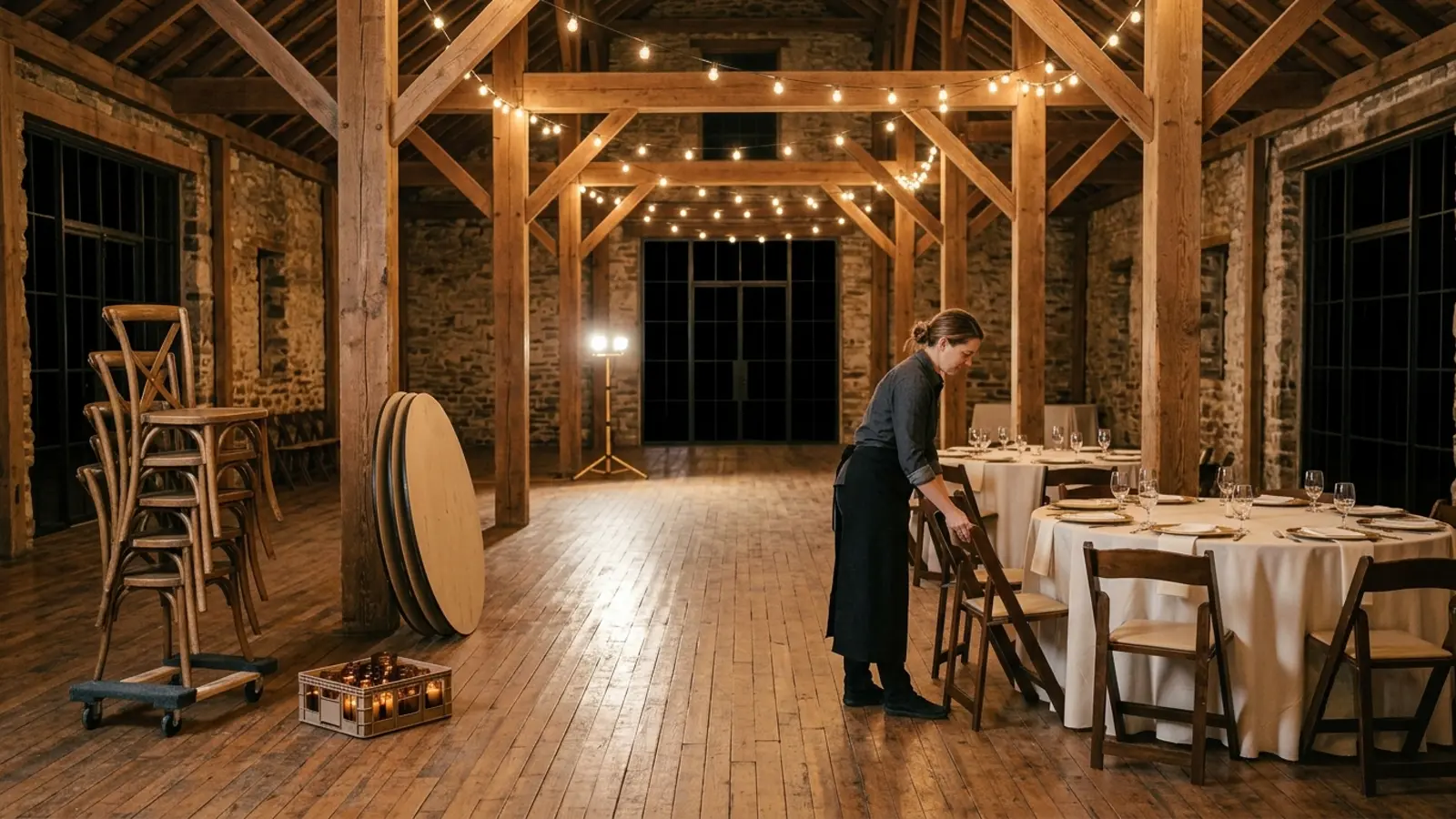
The venues that make a busy season look easy aren't lucky. They're organized. Behind every smooth run of weddings is a set of operations that got handled in advance, so the season itself is execution instead of scramble.
June is the ideal time to build that system, with the next peak far enough out to prepare for and the current one close enough to remember clearly. This wedding venue operations checklist breaks the work into a 90-day framework: prepare before the season, execute during it, and analyze after. Run it once and you have a repeatable system instead of a yearly fire drill. A free downloadable version is at the bottom so you can work it step by step.
Why operations, not effort, decides your season
Every venue owner works hard. The difference between a stressful season and a smooth one usually isn't effort; it's whether the work was systematized. A checklist turns "I hope we remembered everything" into "we have a process," and it makes the whole thing repeatable and delegable instead of living in the owner's head.
Think of the season in three phases, each with its own job.
Phase 1: Pre-season prep (60 to 90 days out)
This is where a smooth season is actually made. Get ahead of these now and the peak takes care of itself.
Review pricing and packages. Confirm your rates still reflect demand and costs. Check that peak dates carry a premium and your packages and add-ons are current. This is the moment to raise a rate or restructure a tier, not mid-season.
Refresh contracts. Read your current agreement with fresh eyes. Are the cancellation, force majeure, insurance, and damage clauses still airtight? Update your template before the bookings pour in.
Audit the calendar. Walk every confirmed booking. Are deposits collected? Contracts signed? Details confirmed? Catch the booking that's missing a signed contract now, not the week of the wedding.
Refresh your vendor list. Review preferred vendors, confirm everyone's insurance and licenses are current, and prune anyone who underperformed. Line up your strongest network before you need it.
Train and staff up. Confirm your team and any seasonal hires, and run training on your process before the first big weekend. Everyone should know the timeline standards, the systems, and their role before a real event tests it.
Check your systems and tech. Make sure your management platform, payments, and templates are set up and working. Clean up stale data. The last thing you want is a software surprise in the middle of your busiest stretch.
Fire up marketing and the pipeline. Confirm your lead capture works, your follow-up sequences are on, and your proposals are ready to send fast. A booked calendar next season starts with a warm pipeline now.
Handle facility and maintenance. Inspect the property, schedule repairs and deep cleaning, test lighting, HVAC, and restrooms, and fix the small things before guests find them. If you manage maintenance and inspections formally, this is the phase to get ahead of them.
Phase 2: Peak-season execution
Once weddings are running, operations shift from preparing to executing. The goal here is a steady cadence so nothing slips under pressure.
Respond to leads fast, every time. Even in peak season, speed to first reply wins bookings. Set a standard (same-hour when possible) and hold it. Busy is not an excuse a couple accepts.
Run a weekly rhythm. A short standing check on the week ahead: which weddings, what's outstanding, which deposits or balances are due, which details still need confirming. A five-minute weekly scan prevents most mid-season surprises.
Prep each event on a standard. Every wedding gets the same treatment: a confirmed timeline, vendor arrival windows, a final walkthrough, and a named point person for the day. Consistency is what makes a busy season feel controlled.
Keep communication tight. Couples and vendors should always know the next step. Confirm details on a schedule so nothing is a surprise on the day.
Track as you go. Log payments, note vendor performance, and record any issues while they're fresh. The data you capture now is what makes Phase 3 useful.
Phase 3: Post-season analysis
When the season ends, resist the urge to just exhale. The two weeks after your last event are when the most valuable learning is available, and it evaporates fast.
Review the finances. What did you actually earn per booking? Which add-ons sold, which didn't? Were there uncollected balances or uninvoiced extras? This is where you find next year's revenue.
Assess what worked. Where did the season run smoothly, and where did it strain? Which weekends were near the breaking point, and why? Honest answers here become next year's improvements.
Do a vendor review. Go vendor by vendor while performance is fresh. Who earns their spot on your list, who needs a conversation, who comes off.
Gather feedback. Ask couples and staff what worked and what didn't. The friction they felt is a roadmap you can't see from the inside.
Plan next season. Turn what you learned into concrete changes to pricing, packages, staffing, or process. Then the next Phase 1 starts from a stronger baseline, and your operations compound year over year.
Get the free operations checklist
We turned this 90-day framework into a checklist you can work through and reuse each season. Download the free wedding venue operations checklist and make it your venue's standard operating rhythm.
From a checklist to a running system
A checklist is a great start. The catch is that a static list still depends on someone remembering to run it. The venues that stay smoothest turn the checklist into a system that tracks itself.
That's the role a venue platform plays. In CeremonySync, the operational pieces this checklist covers live in one place: your calendar shows every booking's status at a glance, a Wedding Readiness Score flags what's incomplete before it becomes a day-of problem, tasks and reminders keep balances and confirmations from slipping, and reports give you the post-season numbers without a spreadsheet marathon. The checklist tells you what to do; a system makes sure it actually happens across a busy season.
Frequently asked questions
What should a wedding venue operations checklist include? Three phases: pre-season prep (pricing, contracts, calendar audit, vendor list, staff training, systems check, marketing, and facility maintenance), peak-season execution (fast lead response, a weekly cadence, standardized event prep, and tight communication), and post-season analysis (financial review, what worked, vendor review, feedback, and planning). The goal is a repeatable system rather than a yearly scramble.
When should venues start preparing for wedding season? About 60 to 90 days out. That gives you time to update pricing and contracts, audit your calendar and vendor list, train staff, check your systems, and handle facility maintenance before the first big weekend, so the season itself is execution rather than catch-up.
How do venues stay organized during peak season? With a steady operational rhythm: a standard for responding to leads, a short weekly review of the week ahead, the same prep process for every event, and consistent tracking of payments and issues. Increasingly, venues run this through a single platform so bookings, tasks, and reminders don't slip when things get busy.
The bottom line
A smooth season is built, not hoped for. Prepare in the 60 to 90 days before, execute on a steady rhythm during, and analyze honestly after. Do that consistently and every season starts from a stronger baseline than the last.
Download the free operations checklist to run the 90-day framework yourself, and see how CeremonySync turns it into a system that tracks itself.